
Why Choose Kingdta for DIP / Through-Hole Assembly?
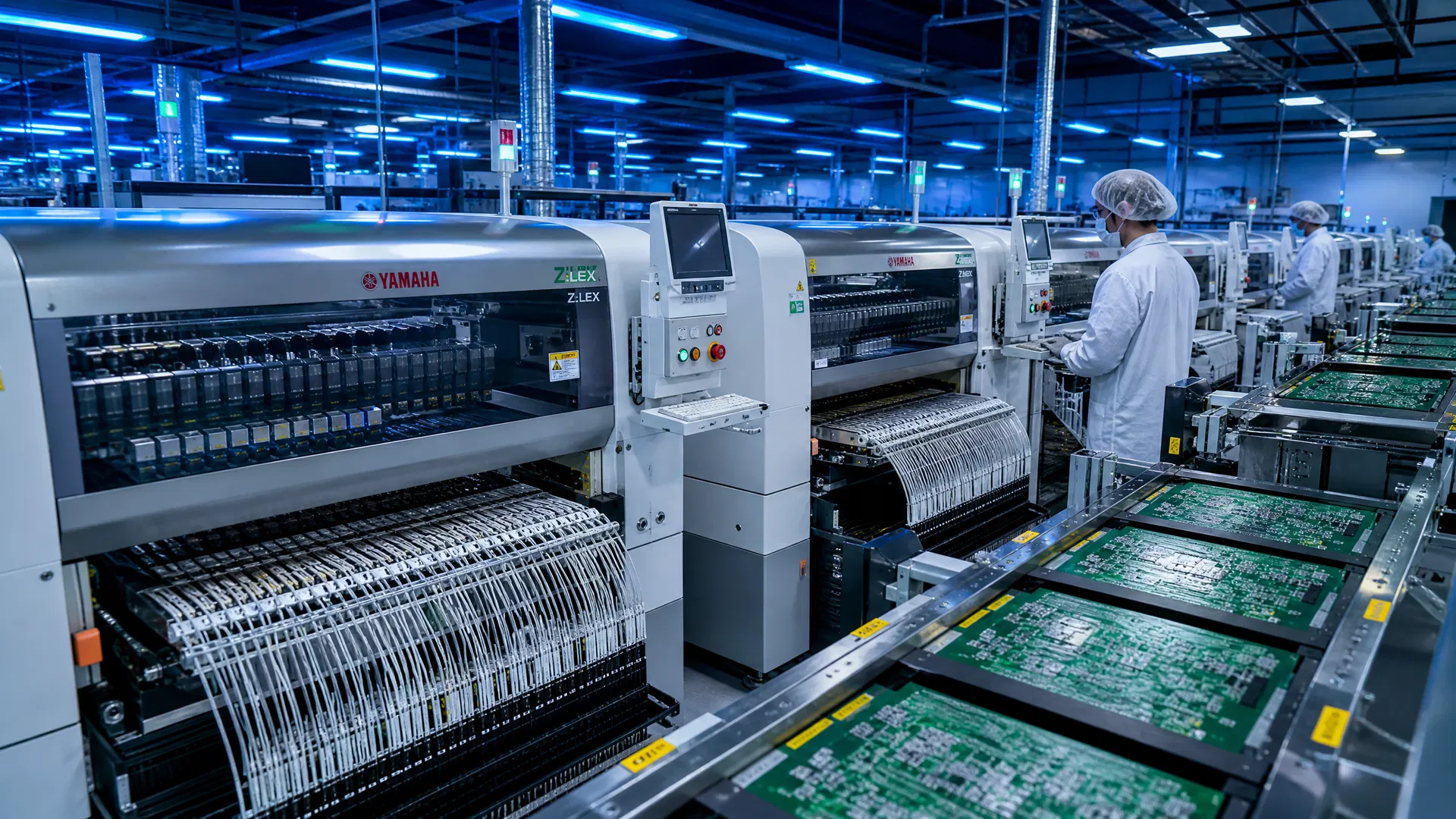
Through-hole (DIP) components remain essential in many applications — power connectors, large electrolytic capacitors, transformers, inductors, and components requiring superior mechanical strength or high-current handling. Kingdta operates 3 dedicated DIP plug-in lines with double wave soldering capability.
We support both fully through-hole boards and mixed SMT+THT assemblies. For mixed boards, SMT components are assembled and reflowed first, then through-hole components are inserted and wave-soldered. Selective soldering is available for boards where wave soldering would damage SMT components on the bottom side — a common scenario in industrial power electronics.
All through-hole assembly work is performed to IPC-A-610 Class 2 or Class 3 workmanship standards. Post-solder cleaning options include water-wash (for flux-sensitive applications) and no-clean processes. Manual soldering is available for complex connectors, heat-sensitive components, and rework.
Key Capabilities
- 3 dedicated DIP assembly lines
- Double wave soldering capability
- Mixed SMT + THT assembly supported
- Selective soldering for complex mixed boards
- Manual soldering for connectors and complex parts
- Post-solder cleaning: water-wash or no-clean
- IPC-A-610 Class 2 and Class 3 workmanship
- Conformal coating available post-assembly
Service Parameters
| DIP Assembly Lines | 3 dedicated lines |
| Soldering Methods | Wave + selective + manual |
| Min Lead Pitch | 1.27 mm (0.05") |
| Mixed Assembly | SMT + THT fully supported |
| Wave Solder Type | Double wave |
| Selective Soldering | Available for complex boards |
| Post-Solder Cleaning | Water-wash / No-clean |
| Workmanship Standard | IPC-A-610 Class 2 / Class 3 |
| Manual Soldering | Available for complex connectors |
| Conformal Coating | Available post-assembly |
How It Works
A transparent, step-by-step process designed to eliminate surprises and deliver consistent results.
SMT First (Mixed)
For mixed boards, SMT components are placed and reflowed first. Bottom-side SMT is completed before THT insertion.
Component Insertion
Through-hole components inserted manually or with auto-insertion equipment. Lead forming as required.
Wave Soldering
Double wave solder process. Selective soldering used where wave would damage SMT components on bottom side.
Post-Solder Cleaning
Water-wash or no-clean process per customer specification. Ionic contamination testing available.
Visual Inspection
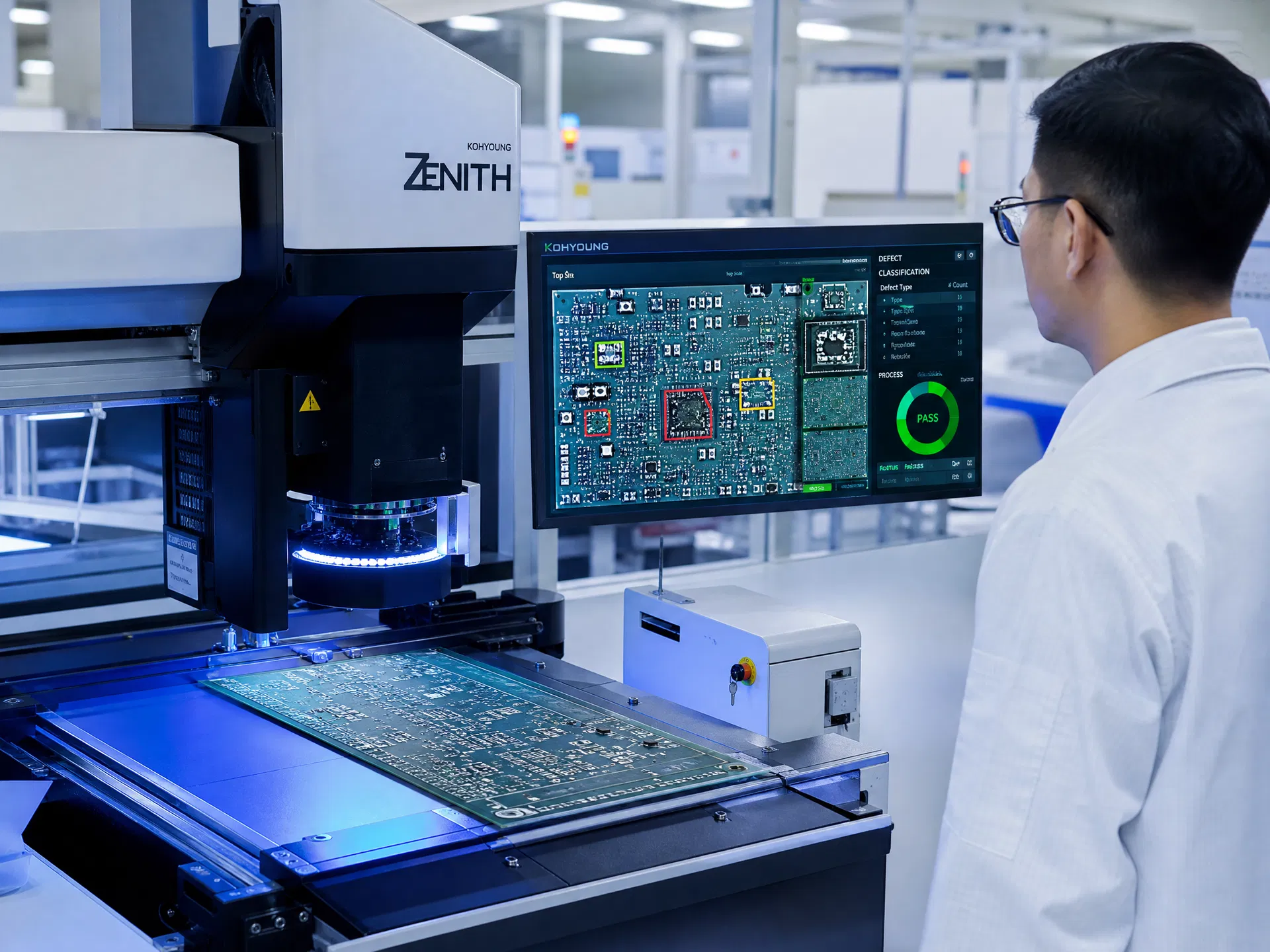
100% visual inspection to IPC-A-610 standard. All solder joints, component seating, and polarity verified.
Testing & Finishing
Functional testing, conformal coating, and final packaging per customer requirements.
Frequently Asked Questions
Explore Related Services
Mixed SMT/DIP Assembly for a High-Voltage Motor Drive Controller
A German industrial automation company manufacturing a 3-phase motor drive controller for conveyor systems — combining a dense SMT control board with through-hole power connectors, capacitors, and terminal blocks.
The Problem
The customer's previous assembly supplier could not reliably solder the through-hole power connectors (3-pin, 10mm pitch, rated 30A) alongside SMT components in a single pass. The supplier's wave soldering process was causing solder bridging on adjacent SMT components, requiring manual rework on 23% of boards.
Key Challenges
- Mixed SMT and through-hole assembly on a single board — 147 SMT components + 18 through-hole parts
- Through-hole power connectors require 3.5mm solder fill depth — challenging for selective soldering
- 0.4mm pitch STM32H7 microcontroller adjacent to through-hole connector zone
- IPC Class 3 workmanship required for industrial motor drive application
- 500 boards/month volume — rework cost was adding €4.20 per board to production cost
Our Solution
We implemented a selective soldering process for the through-hole components after SMT reflow, using a Pillarhouse Jade selective soldering machine with nitrogen atmosphere. This eliminated the wave soldering process entirely, preventing solder bridging on adjacent SMT components. The selective soldering program was developed with 0.1mm nozzle positioning accuracy to solder the power connector pins without affecting the nearby 0.4mm pitch STM32H7. We implemented 100% AOI after SMT reflow and 100% X-ray inspection of the STM32H7 BGA after selective soldering to verify no thermal damage to adjacent components.
Results & Outcomes
"The selective soldering process Kingdta implemented solved a problem we'd been living with for two years. The rework cost reduction alone justified the switch, and the IPC Class 3 quality level has eliminated the warranty claims we were getting from field failures in high-vibration installations."
Production Manager, Industrial Automation Company — Nuremberg, Germany