Smart Home Hub PCBA Prototype-to-Production Transition for Canadian Consumer Electronics Brand
Managing BOM cost reduction, regulatory compliance (FCC/IC/CE), and scaling from 100 to 10,000 units without design changes
Project Overview
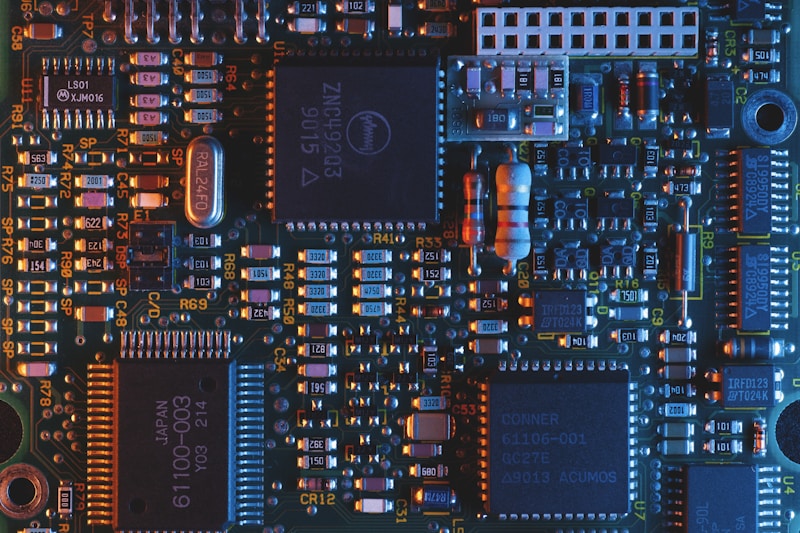
A Toronto-based consumer electronics startup had developed a smart home hub integrating Wi-Fi 6, Zigbee, Z-Wave, and Bluetooth 5.2 on a single board. The prototype had been built by a local Canadian assembly house at $47/unit for 100 units. For their Kickstarter production run of 10,000 units, the target cost was $28/unit — a 40% reduction that their prototype assembler said was impossible without a complete redesign.
The Challenge: Cost Reduction Without Redesign and Multi-Protocol RF Compliance
The BOM included 4 separate RF modules (Wi-Fi 6, Zigbee, Z-Wave, BLE) from different manufacturers, each with their own FCC/IC/CE certifications. Using pre-certified modules was the correct approach for a startup, but the module selection had not been optimized for cost — the Wi-Fi 6 module alone was $8.50/unit when a pin-compatible alternative with the same certifications was available for $4.20/unit.
The board had 3 antenna keep-out zones for the 4 RF modules, and the original layout had placed a large electrolytic capacitor inside the Zigbee antenna keep-out zone. This had caused a 4 dB gain reduction in Zigbee range — not a problem for the prototype, but a potential field performance issue at scale.
The customer needed FCC, IC (Canada), and CE certifications for the final product. The pre-certified modules covered the RF emissions, but the system-level certification required EMC testing of the complete assembly. The customer had no experience with the certification process.
The production run needed to scale from 100 to 10,000 units with no design changes — the customer's Kickstarter backers had already seen the product and any visible change would require re-disclosure.
Our Engineering Approach
Our component engineering team reviewed the BOM and identified 12 line items where pin-compatible alternatives with equivalent or better specifications were available at lower cost. The most significant substitutions: Wi-Fi 6 module ($8.50 → $4.20), Z-Wave module ($6.80 → $4.50), and the main power management IC ($3.20 → $1.85). Total BOM cost reduction: $11.95/unit — exceeding the customer's target.
We flagged the capacitor placement in the Zigbee keep-out zone and provided a corrected placement that moved the capacitor 3.5mm outside the keep-out boundary. We also recommended rotating the Zigbee module 90° to improve antenna orientation relative to the board edge. The customer's RF engineer validated the changes with a spectrum analyzer, confirming a 3.8 dB improvement in Zigbee RSSI.
We connected the customer with our certification partner (SGS Shenzhen) and provided the complete manufacturing documentation package required for FCC/IC/CE system-level testing: BOM with component certifications, assembly drawings, test firmware, and our production quality records. The customer passed FCC/IC/CE on the first test submission.
We implemented a production control plan that locked all component substitutions, placement coordinates, and process parameters in our MES system. The 10,000-unit run was produced across 4 weeks with a consistent 99.4% first-pass yield, and all units were shipped with individual serial numbers and test records.
Measurable Results
""We went from $47/unit to $28/unit without touching the design. Kingdta's component engineering team found substitutions our own team had missed. The certification support was a bonus we didn't expect — they basically guided us through the entire FCC process."
— CEO, Smart Home Startup (Toronto)
Start a Similar Project
Send us your Gerber files and BOM. Our engineering team will review your design within 24 hours — free DFM analysis included.
WhatsApp: +86 134 2427 5990